Revisiting the ‘60s
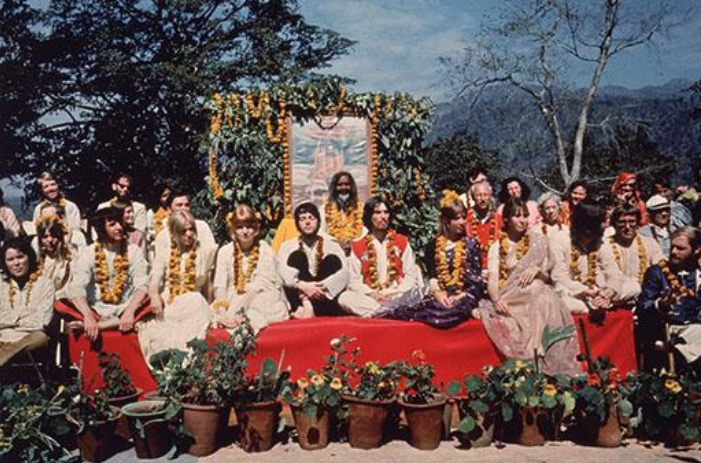
I have long been fascinated by the ‘60s. It’s not so much particular experiences in the ‘60s themselves as later reflection on that time. In particular, Theodore Roszak’s book The Making of a Counter Culture helped to give me a theoretical perspective on the time. The younger generation rebelled against their elders, finding them slavishly conformist to tradition and subservient to a technocratic culture. The result was a new religious vision that for a tantalizing moment brought East and West together in a progressive cultural synthesis.
More recently, I’ve been stimulated by the thoughts of Camille Paglia on the time. She finds that there was a great renewal of interest in religion, particularly religion outside the conformist churches in the US at the time. Although that time had great promise, interest in it faded.
 She looks in detail at the reasons for that fading and examines any themes that survived. Often when she speaks her thoughts come too fast for her tongue to get them over her lips, but not when she delivers a prepared lecture. We are fortunate to have such a lecture easily accessible on the Internet. Just enter “Cults and Cosmic Consciousness” into the search bar of your web browser and you will likely see several results that you can download.
Her detailed research is astonishingly wide-ranging and is not limited to academic culture but is equally at home in the pop world. The first surprise is a comparison between the 60’s and the late Roman Empire:
“Cults multiply when institutional religion has lost fervor and become distracted by empty ritual. What commercialized Hellenism was for the Greco-Roman era, popular culture was for the American fifties and sixties...Cultic practice on the Roman frontier, I submit, paralleled that on American campuses in the sixties, when there was a syncretistic mix of drugs, Asian religion, and pop idolatry.”
Now Paglia lived through the 60’s but did not take drugs. She is also interesting because although she is an atheist, she believes that study of the major world religions should form the core curriculum for global education. She views this study as the key to politics as well as art.
Why did the religious impulse of the sixties fade? Paglia explores this from several angles.
-
Drug abuse truncated the intellectual careers of many 60s thinkers (for example Alan Ginsberg).
-
American universities failed to address the spiritual cravings that the 60s exposed.
-
The media picked up on the legal and political controversies of the 60s but found it much more difficult to explore the religious side of the 60s.
However, an immense alternative culture survived the collapse of the 60s: New Age. Because New Age is unstructured and decentralized, it has been underestimated as a force competing with mainline religions. There is also the Esalen institute, which combines religious traditions (largely Eastern) with humanistic psychology. The problem with New Age, Paglia says, is that it is “choked with debris- with trivia, silliness, mumbo-jumbo, flimflam and outright falsehoods”. To counter this, we need scholarly knowledge of ancient history, including especially Buddhism and Hinduism.
The shift in the 60s was not a rejection of religion but a search for new forms of meaning in a rapidly changing world. This helped shape the era’s distinctive ethos of liberation and self-discovery. Laurie Chisholm