Living in the “after- Life”
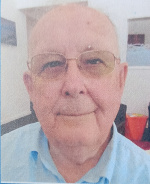 I hope that readers will forgive me for using the above essay title, but it does actually fit the subject most precisely!
Also, please forgive me for this very short resume of some 88- years of my ‘Life’ which probably mirrors so many others in having ‘average’ school achievement; changing employment(s); early marriage and a growing family contending with mortgages and the usual standard pursuits excepting, that at age 34, I decided to gain an external Open University(UK.) degree in History and Philosophy. Having done so, I decided to follow up this with a full-time degree at St. Mary’s College, St. Andrews (Fife) reading Theology (with Languages !!) which in turn led on to a Doctorate. In turn, this led to a further ’50’-years of trying to keep abreast of various ‘learned’ academic studies. In the last few years, my failing eyesight made me transition to E-book reading & readers. Finally increasing mobility issues meant that I transited to my faithful computer and the New ZOOM-capabilities increased my Visual /audio contacts with others by computer in continued conversations and discussions.
Despite the increased feelings of growing isolation, I was contented in my own home with my wife, my little dog companion(s), and the view of beautiful hills East of Gisborne as well as the local roadway with its passing traffic and homeward bound pedestrians. However, mobility issues alone finally meant that I needed to accept that ‘full-time,’ Rest Home care became inevitable. Having used ‘one’ particular Home for ‘Respite-care’ covering my wife’s (necessary) recreational holiday with her family, I reluctantly agreed to permanently re-accept residency there because of her impending illness which necessitated hospitalised surgical care. I AM NOT going to discuss conditions in this Rest-home! [They are simply excellent in their provision of food; care; Staff; and available facilities.]
But … … and hence the article Title!
Once a ‘resident,’ I very quickly became aware of something I had NOT noticed previously. There was a definite lack of conversation and inter-communication between most of the residents. I remembered having read an article (see below) written by an Australian living in a similar facility. In that, he described his ‘ABSOLUTE and UTTER BOREDOM’! I noticed that in my case, it was not that everybody was simply ‘old’ and mainly ‘female’! It was that most folk were suffering from varying degrees of ‘dementia’! Lovely, ordinary homely folk; ‘salt of the earth’ folk. Mainly Pakeha but with quite a sprinkling of elderly Māori. [Just recently, there has been medical-speak here in NZ of a growing statistic of ‘dementia’ within its rapidly aging population.]
As someone who has been a church minister –[Church of Scotland & PCANZ] I still was intensely interested in all the ‘goings-on’ in current world affairs; church affairs; as well as local news, I found it most difficult to adjust to the fact that (here) the spoken word was, and is, seldom ‘heard’ unless it is in the canned music of yesterday’s era of ‘pop’! The truth is, that in that first 6-months, I simply have NOT adjusted. Such was its impact that for the very first time in my whole life; I found myself feeling intensely ‘depressed.’ I found myself becoming totally dis-interested in everything.
I have to also say that these Homes do provide Staff who are tasked with what is called ‘diversional therapy.’ This is usually ‘games’ in which all present can take part in some capacity. Folk music groups feature prominently in what is offered and usually is music from ‘yesteryear’ which can sometimes induce some participation in singing treasured and remembered words. ‘Bingo’ proves to be popular with many which poses questions about the real state of the residents ‘thinking’ capacity -- hence my comment earlier about ‘degrees’ of dementia!
I ask (of myself) …’ is this situation’,(- which I am trying to accurately describe,) a function of aging or is it a factor induced by dominating circumstances? Is it that NZ Rest Homes are really a ‘sort-of’ last resort for what to do with geriatric persons? As a former Minister in New Zealand, I visited many of these Homes and never actually became aware of these absolute ‘silences! {Mea culpa !!] Was I particularly insensitive … (or just too ‘busy’ to notice?) Retaining ‘most of my marbles,’ I quickly learned most of the staff and resident’s names quite easily. I then thought that here was an opportunity to ‘minister’ within this community. Not in any proselyting manner, but as an evolving change of Theology aimed at expressing Christian friendship (fellowship ) and pastoral care for my ‘colleague-in- care.’
After 6-months, I still keep asking myself new questions. How do I cope with my personal sense of ‘useless-ness’? The mental pain of enforced inactivity means that time seems to drag-on endlessly. [This had never been an issue in the past!] There is no longer any sense of purpose within my life. I understand the depth and effects of UTTER BOREDOM on me but am only just beginning to see partial solutions.
I now make a deliberate effort to join the ‘exercise’ session each morning. Not only does it provide some easy physical exercise, but it also offers a welcome opportunity to engage in small talk conversations with others. The net result has been to encourage others to respond to each other in like manner. Remembering everyone’s names ‘engages’ people in a meaningful (but limited) way [I will resist claiming any credit, but I have noticed that others, previously silent, now speak to each other more often.]
This daily contact keeps me ‘up-to-date’ with news of illnesses and other ‘insider’ information which otherwise would go unnoticed. It allows me to ‘drop-in’ to other rooms and say, ”Hello etc.!” whilst moving around the premises supporting my own personal mobility.
Where I have discovered a niche which could be called a Christian ‘pastoral’ purpose is making a conscious and deliberate effort to sit alongside other residents who have suffered debilitating strokes and are infrequently visited (perhaps) by out-of-town family and whanau. I find this (personally) most rewarding by simple smiles and attempts to speak acknowledgements to small-talk. I stress the fact that I do not try any form of ‘spiritual-talk’ on such occasions. Any form of ‘reward’ is in the personal feeling of having tried – in my own way, to alleviate their obvious loneliness. I do notice some small improvement(s) in their communicative efforts which may (or may not be) directly correlated. Who can really tell … but it seems that way to me.
Am I adjusting: - OR complying? Or finally ‘aging’? It has taken months. I only have done so by trying to hold on to this idea of ‘purpose-in-my-life.’ I now read everyday books/fiction from the Royal Blind Foundation “Blind Low Vision Library” using a downloaded Dolphin Reader App, and monthly, join a small but worthwhile ZOOM group to discuss the latest choice for the Month. These are instructional as well as social and most enlightening. I use ZOOM to keep my world-wide interests and contacts. I use my computer for many different things. Staff now note that I am ‘working’ and keeping my brain ticking! Meaningfulness is slowly returning. My experiences and trauma, - in its own small way, may cause you to reflect usefully on everyday issues such as inducing PURPOSE and MEANING into what you are doing or will be doing in the future.
Somewhat as an afterthought, I do wonder whether the current debates around EUTHANASIA are rooted indirectly by proponents in their own personal search for ‘Purpose & Meaning’!!!
Article Quoted and Reproduced for comparison purposes:
“… As I sit in my room in this Australian nursing home, I'm enveloped in warmth and coziness. The afternoon sun filters gently through the curtains, casting a soft glow that dances on the walls. The room, modestly furnished, is my sanctuary—a haven from the unpredictable world outside. It's a strange paradox really to feel so safe and yet so profoundly bored.
My days here are predictable to the point of tedium. Breakfast at eight, lunch at noon, dinner at five. In between, there are activities designed to keep us engaged—bingo, chair exercises, and the occasional sing-along. While these diversions are pleasant enough, they do little to dispel the monotony that often settles like a heavy fog. The staff, ever kind and attentive, do their best to make life here comfortable. They are like an extended family, always ready with a smile or a helping hand. Yet, despite their efforts, there is a loneliness that creeps in, a yearning for the days when life was full of spontaneity and adventure.
I spend a lot of time in my chair by the window, watching the world outside. The view is limited to a small garden, meticulously maintained, where birds occasionally flit about. It's a tranquil scene, but it lacks the vibrancy of the bustling streets I once knew. I miss the simple pleasures of daily life—going for a stroll, having a chat with a neighbour, popping into the local shop. Reading has become a cherished pastime, offering a temporary escape into different worlds. Yet even the most gripping novels can't entirely fill the void. Conversations with fellow residents often revolve around the past, our shared memories a bridge to a time when we were more than just the sum of our ailments.
In this warm, cozy room, I am safe, but the price of this safety is a stifling boredom. It is a delicate balance; this life of security tinged with monotony. I am grateful for the comfort, yet I can't help but long for a touch of the unpredictability that once made life so exhilarating. … …”