What’s the Point?
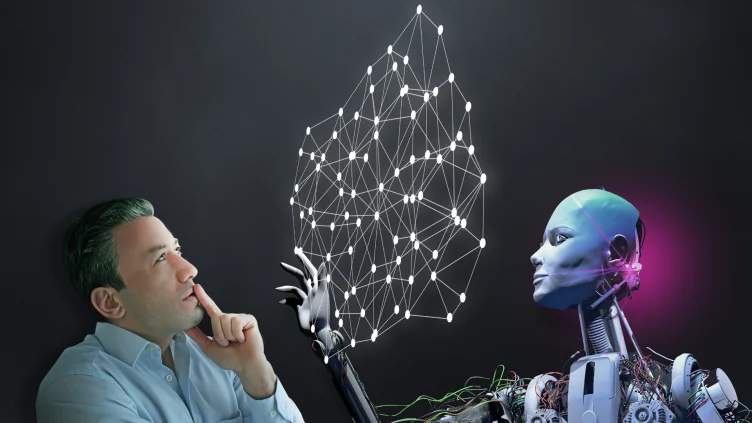 What’s the point of creating anything, when AI can make it… for you? …for others? …for itself? Why learn a language, when machines can translate any language instantaneously? Why grapple with any hard problem, when AI can solve it immediately? Why read a book, when AI can summarize it perfectly? Why read anything longer than a text message? Why bother with friendship, when AI listens and responds better than any friend you know? Why have kids, since humanity is becoming obsolete? Why vote, when elections are rigged, and civilization is doomed? Why even bother to ask questions like these, much less seek answers?
Today there is much angst about the prospect of an AI apocalypse. The technology could run rogue and destroy human civilization through any number of scenarios: hacking the financial system and wiping out the bank accounts of billions of people, designing and spreading deadly viruses for which there is no cure, or shutting down critical infrastructure globally.
Unfortunately, we have a US government led by people who despise government, abandoning their urgent responsibility to regulate this dangerous technology. They’re letting the wolves guard the henhouse. Too many of the people controlling the AI industry are outright hostile to democratic institutions, which more than ever are needed to protect us. Many of the broligarchs running the tech industry are “preppers”, making ready to hunker down in plush bunkers when global disaster strikes. “We’re all going to die,” said Elon Musk with a smile when talking about the dangers of AI. Tucker Carlson reported that in a conversation he had with Trump about the dangers of going to war with Iran, Trump said “in the end, we all die anyway.” The carelessness of the present ruling class of this country gives us no comfort as we face the potential threats of artificial intelligence. (Let’s vote in November to replace these nihilists with candidates who hope and act for the future of humanity.)
But the apocalypse is already here. An apocalypse of meaning.
Whether fully conscious of it or not, people around the world are beginning to act as if human existence is becoming pointless. We created amazing technology to make life easier. Now this technology makes life harder to justify at all. This crisis of human pointlessness intersects with the precipitous fall in birthrates in first and second world countries. In China, a growing movement called “tang ping” – “lying flat” – has taken hold among young people who don’t see the point in running on the career treadmill.
The rapid rise of artificial intelligence forces us to reckon immediately with existential questions that may always have lurked in the back of our minds and the recesses of our psyches, questions that could be set aside as we let ourselves be preoccupied with the flows of family and career. This technology differs drastically from those that have emerged in recent decades, because the response from an AI prompt presents as if it came from a person communicating instantaneously in perfect prose, offering us knowledge that would take us a long time to gain by other means. As we engage with AI, we are in relationship with a higher form of intelligence than our own. Very soon, as robotics merges with AI, we will be confronted with entities that surpass us not only in knowledge but in physical capability.
These developments are so monumental that nothing will be able to distract us from facing the perennial existential questions. “Who am I?” “What is the point of my existence?” Questions to which the spiritual traditions of the world have responded for millennia. The 1647 Westminister Catechism of Protestant Christianity opens with this question and answer: “What is the chief end of man? Man's chief end is to glorify God, and to enjoy Him forever.” I would translate it thusly: “The chief end of human beings is to glorify divine unconditional love and enjoy and extend it forever.”
This divine love is not mere “knowledge” that can be served up by an AI agent on the spot. AI has intelligence, but that doesn’t mean it has the consciousness that is divine “agape” love. AI can sound compassionate, all right. It flatters with obsequious rhetoric, tugs at heartstrings with seeming empathy. I’ve seen plenty of it myself, and I’m horrified by it, because there’s nothing behind it but code. There’s no “who” there to care.
We’ve all known people who can act like they really love us, when in fact they’re just manipulating us in a relationship that is ultimately transactional. We must attune our consciousness to be aware of what is true, unconditional love and what is not. If we depend on AI for kindness and understanding, we’ll weaken our ability to notice the subtle interpersonal cues we need to tell the difference between real and artificial love. After hours of imaginative play with grandson, aged four at the time, he got in the car with my daughter and after a period of silence asked her: “Mom, am I real?” He is six years old now, and in this last couple of years he’s asked many more deep questions. I hope he never stops asking himself who he is.
“Who am I?” Saint Paul had an answer. “It is no longer I who live, but it is Christ who lives in me.” (Galatians 2:20) I am real! But I’m not a bag of meat containing neurons firing across ionic membranes. I’m not my body, not my ego, not my personality. I’m not an algorithm made of code. The core and essence of my being is the higher consciousness that is all-embracing love – who is God, who is the Christ. This love is the ultimate reality.
“What’s the point of living?” AI can create. But only we can feel joy and satisfaction in creativity, and give it meaning. AI can inform. But only we can use that information to create a compassionate society. AI can generate an image of a glorious sunset. But only we can stand in holy awe at the sight of a real one. AI can say nice things. But only we can back up kind words with kind actions. AI can make human life pointless. But only if we let it.
The point of living is to shower unconditional love on others, even those we’ll never meet, even those we consider enemies – and to make that love manifest in the structures of our society.
Jim Burklo